

How AI Candidate Matching Helps Recruiters Find the Right Talent?
Be honest. How many resumes can you read in a day before they all blur together?
Ten? Fifty? A hundred?
Now imagine 500 applications for a single job. Some of those people are a great fit. Some are not even close. And you have no easy way to tell which is which, until you have read every one.
That is the real problem. It is not about getting more applicants. It is about finding the right ones without losing your whole week.
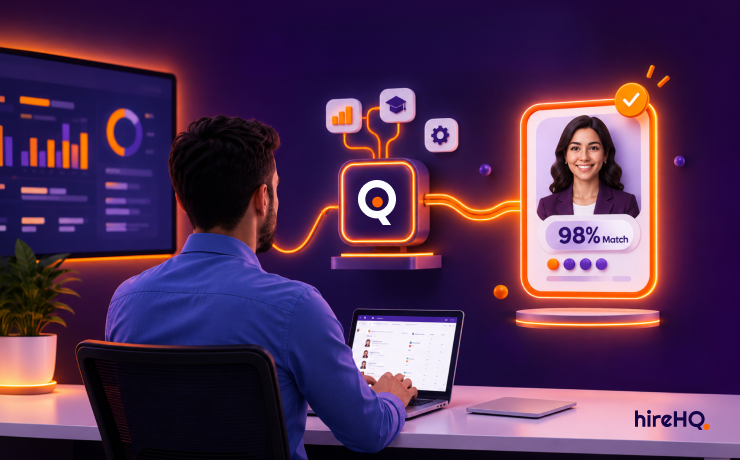
AI candidate matching helps recruiters solve this problem by identifying suitable candidates faster. Let’s understand how it works and what it brings to the hiring process.
What Is AI Candidate Matching?
AI candidate matching uses software to compare candidate profiles with the needs of an open job. It looks at skills, qualifications, work history, and other details to find people who suit the role.
Traditional screening depends on keywords. A recruiter hiring a developer might search for “Python” or “SQL.” But a good candidate may describe the same skills in different words and get skipped.
AI matching looks at the full picture. For a project manager role, it can check experience in project delivery, team coordination, budgets, and talking with stakeholders. Then it shows recruiters the profiles that fit best.
The goal is simple: less time searching, more time talking to people worth considering.
How It Works?
Step 1: Understand the job
The recruiter lists the skills, experience, and duties the role needs. The tool uses this list as its base.
Step 2: Read the resumes
Resumes come in many formats. The tool pulls out key details like education, past roles, skills, and certifications. It turns them into clean, searchable profiles.
Step 3: Compare profiles with the job
The tool checks many factors, not just one keyword. Say two people apply for a marketing manager job. One knows paid ads well, and the other knows SEO and content. The tool shows how close each one is to what the role needs.
Step 4: Give a match score
Some platforms score each candidate. The score may consider:
- Relevant work experience
- Technical and soft skills
- Education and certifications
- How recently the skills were used
A high score tells the recruiter who to review first. It should help the decision, not make it.
Quick view:
Job requirements → Resume reading → Profile comparison → Match score → Recruiter review
5 Ways AI Matching Helps Recruiters
- Less manual screening
With 500 applications for one job, reading every resume slows everything down. AI sorts of profiles by fit, so recruiters start with the strongest ones. This helps most for teams hiring across many roles or locations.
- Faster path to relevant candidates
The best fit is not always the person with the longest resume or biggest job title. Someone with three years of directly relevant work may beat someone with eight years in another field. AI compares people against the real needs of the job and spots skills described in different words.
- Better use of existing talent pools
Most teams already hold many profiles from past applicants, referrals, and former employees. These are hard to search by hand. AI lets recruiters find fitting people in this pool before starting a fresh search. It also supports direct sourcing solutions by helping recruiters identify and connect with suitable candidates without relying only on job applications. This helps when hiring for similar roles often.
- More consistent screening
When several recruiters work on one job, each may judge candidates differently. AI gives everyone the same job-based criteria, which makes comparing candidates easier.
One caution: teams should review the criteria often and check for bias. The tool should never judge people by age, gender, background, or other personal traits unrelated to the job.
- More time for people
Recruiting is more than reading resumes. It means answering questions, setting up interviews, collecting feedback, and building relationships. When screening takes less time, recruiters can do more of this. It matters because even strong candidates lose interest when replies are slow.
How hireHQ Helps?
Finding the right candidates is only one part of successful hiring. Recruiters also need to build talent pools, identify suitable profiles, assess applicants, and maintain communication throughout the hiring process. Managing these activities separately can slow down hiring and make it harder to keep candidates engaged.
hireHQ brings these activities together through its AI-powered talent engagement platform. Its AI candidate matching capabilities help recruiters compare candidate profiles against job requirements and identify relevant talent. AI resume parsing extracts key information from resumes, making candidate profiles easier to organize, search, and review.
Another key capability is Genie, hireHQ’s AI Co-Pilot Recruiter. Genie assists with candidate screening and Level 1 and Level 2 interviews, helping recruitment teams handle initial assessments more efficiently and dedicate more time to evaluating shortlisted candidates.
Other key hireHQ capabilities include:
- Talent Pool Management: Build, organize, and maintain talent pools to support current and future hiring needs.
- Candidate Discovery: Find relevant candidate profiles based on skills, experience, qualifications, and other job-related criteria.
- AI Resume Parsing: Extract important candidate information from resumes and organize it into structured profiles.
- Candidate Engagement: Maintain communication with candidates through personalized messages and timely follow-ups.
- Recruitment Analytics: Monitor recruitment activities, track hiring performance, and gain insights into recruitment results.
Together, these capabilities help recruiters manage the hiring process more efficiently, from finding suitable candidates to making informed hiring decisions.
Is AI Matching Enough?
AI matching can help recruiters shortlist candidates, but the hiring decision needs a closer look. A candidate’s skills, experience, communication, and approach to work also matter.
- A candidate can meet every requirement and still lack the communication skills or work style the role needs.
- A candidate with a lower score may bring valuable experience that the resume does not show well.
AI matching should be a starting point, not the final answer. Recruiters still need to review shortlisted profiles, conduct interviews, test practical skills, and check whether candidates are a good fit for the role.
AI helps narrow down the options, while recruiters use their judgment to make the final decision.
Final Thoughts
Finding the right person takes more than collecting applications. Recruiters need to understand job requirements, identify relevant skills, and evaluate candidates carefully.
AI candidate matching helps with this process by organizing candidate information and highlighting profiles that align with job requirements. It also gives recruiters more time to focus on candidate evaluation and engagement.
With hireHQ, businesses can manage candidate matching, talent pools, and candidate engagement through one platform, helping recruitment teams move from searching for candidates to building stronger hiring outcomes.
That’s all for today! We hope you found this article helpful. If you’re interested in exploring more about AI-powered recruitment, talent management, and workforce management, check out these related articles:
5 Ways Direct Sourcing Helps Reduce Your Recruitment Costs
The Future of Contingent Workforce Management: Trends & Predictions for 2027–2029
Top 25 Interview Questions for Hiring the Right Clinical Talent